

On the 27th September 2025, Tom Reading delivered an inspiring TEDxNHS talk about the importance of physiotherapy in cancer care for teenagers and young adults titled “Physiotherapy Saves Futures”. You can find the video here. The talk is crucial in highlighting the importance of oncology physiotherapy in teenage and young adults cancer care, and we are very proud of Tom’s achievement. We have therefore decided to ask Tom to share a bit about himself and reflect on his talk.
A bit about Tom Reading

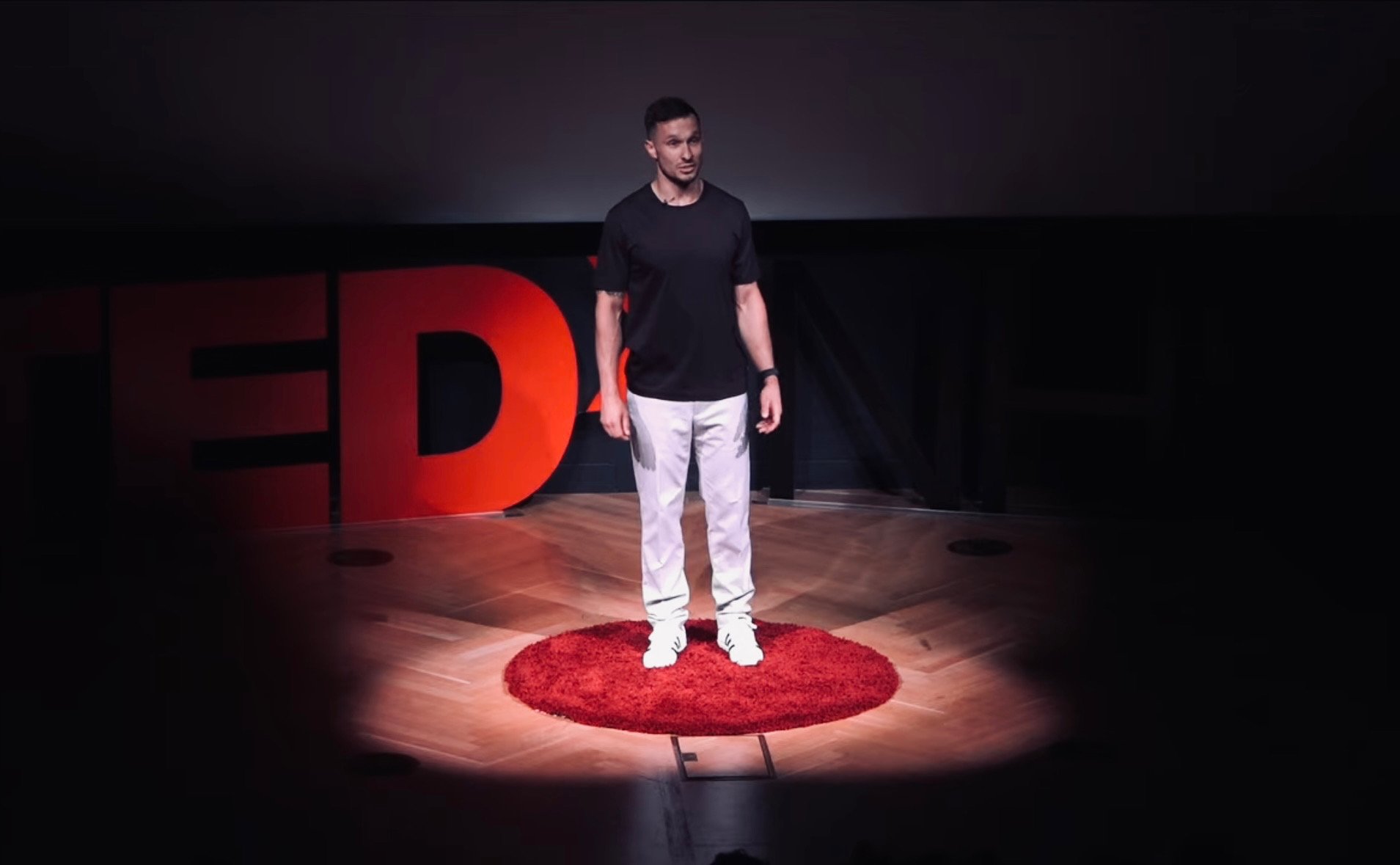

Tom Reading is the Clinical Lead Physiotherapist at The Christie NHS Foundation Trust, specialising in supporting teenagers and young adults (16-24) with cancer. Combining professional expertise with personal experience, he is passionate about making movement, activity and physiotherapy a standard part of cancer care. Tom is also a national speaker and TEDxNHS presenter, advocating for the power of physiotherapy to restore not just mobility, but also identity, dignity and quality of life for young people facing cancer.
Reflecting on the TEDxNHS talk
While there are many ways of disseminating and sharing knowledge, doing so through a TEDx talk is certainly a unique and innovative way of doing so. We were certainly intrigued about the experience, and Tom was kind enough to share a written reflections about the process of preparing his talk with us, which you can read below.
Physiotherapy Saves Futures – Reflections on TEDxNHS 2025
By Tom Reading, Band 7 Clinical Lead Physiotherapist in Teenage and Young Adult (TYA) Cancer Care
On Saturday 26th September 2025, I had the privilege of speaking on the stage at Bush House, King’s College London, as part of TEDxNHS 2025. This year’s theme, Evolve, perfectly reflected the message I hoped to share. That cancer rehabilitation and physiotherapy’s role within it must continue to evolve. Physiotherapy should no longer be seen as an optional extra, but embedded proactively and preventatively as a standard part of care.
My talk, “Physiotherapy Saves Futures – Make Movement Standard in Cancer Care”, was delivered to a live audience of around 400 people and live streamed on YouTube. It was an experience I will never forget. It was humbling, inspiring and thought-provoking. Preparing for the talk gave me the chance to reflect not only on my own practice, but also on the wider value of physiotherapy in oncology and palliative care, particularly for teenagers and young adults.
Why TEDxNHS 2025?
In my work, physiotherapy is too often misunderstood as something supplementary rather than essential. Yet movement, exercise and activity extend far beyond restoring physical function. They rebuild confidence, protect identity, and give patients – especially young people – the opportunity to reclaim parts of their lives at a time of profound uncertainty.
TEDxNHS provided a national platform to share this message. More importantly, it allowed me to highlight the resilience and determination of the young people I work with, whose experiences continue to inspire me and remind me why physiotherapy matters.
The Process
Preparing for TEDxNHS was unlike any professional experience I’ve had before. Unlike clinical presentations, abstracts or posters – where the emphasis is data driven – this talk demanded something different. It required me to step outside my comfort zone and embrace vulnerability, storytelling and emotional connection.
I tried to balance evidence with humanity, weaving clinical research alongside lived experiences of my patients. In doing so, I came to realise that evolving how we communicate about physiotherapy is just as important as evolving the practice itself.
It also felt necessary to ask difficult questions. Why are movement and activity still not embedded as standard in cancer pathways? My hope was to encourage the audience to reflect on this and to join the call for change.
The Impact
Standing on that famous Tedx red dot, I felt a strong sense of responsibility to represent TYA’s, physiotherapy and my colleagues working in oncology and palliative care – in a way that would resonate beyond the profession. The response was really encouraging. The conversations that followed, both in the room and online, suggested that my message really connected with people, sparking reflection on how movement could play a much greater role in practice. I have been genuinely moved by the thoughtful messages and reflections shared by colleagues from across the country and across disciplines.
For me, this is the true power of TEDxNHS. It creates ripples of dialogue and change that extend far beyond a single event.
Looking Ahead
Physiotherapists play a unique role in cancer care, not only in supporting survival outcomes, but in enhancing quality of life, dignity and independence. I hope that this talk can contribute to the growing call for movement, activity and physiotherapy to be recognised as integral to oncology and palliative care.
I feel privileged to have had the opportunity to contribute to TEDxNHS 2025 under the theme Evolve. More importantly, I am proud to be part of a profession that demonstrates, every day, that physiotherapy saves futures.
“Physiotherapy shouldn’t be an exception, it should be the expectation.”